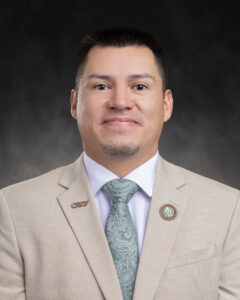
Aniwodihi (Painttown) Rep. Michael Stamper (Photo contributed)
Hello everyone,
This is my Council Report for the month of March. As always, my report follows the standard format below.
Community Events
March 30 – MMIP Database Community Meeting
Share your input on how the EBCI (Eastern Band of Cherokee Indians) MMIP database can support awareness, prevention, and respectful representation of closed and solved cases while protecting privacy and sensitive information.
Time: 5 p.m. – 6:30 p.m.
Location: Yellowhill Activity Center
April 1 – Community Easter Event
Annual Easter event. Meet the Easter Bunny, participate in the Easter Egg Hunt, and enjoy additional games.
Time: 5 p.m. – 7 p.m.
Location: Old Acquoni Expo Center
April 4 – Every Child Matters Super Hero Walk/Ride
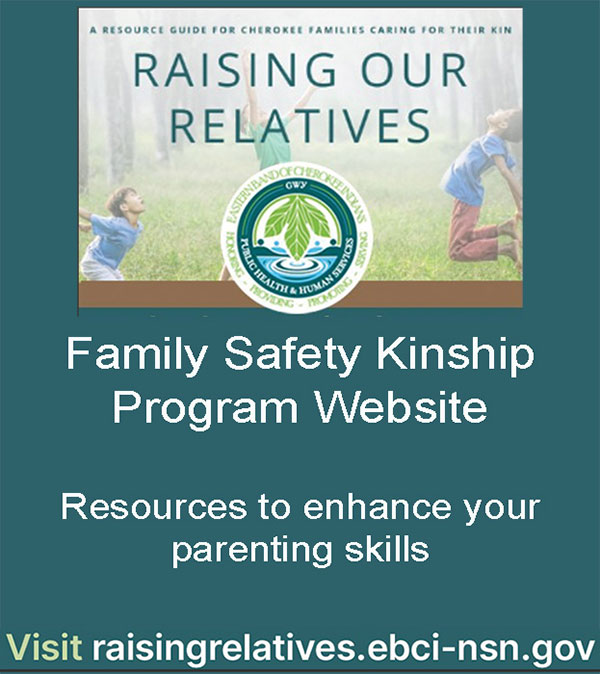
PHHS Family Safety and community partners invite everyone to join a walk/ride to raise awareness and provide education about child abuse.
10:15 a.m.: Meet at the Museum of the Cherokee People parking lot
11 a.m.: Walk/Ride begins
Additional activities will follow until 2 p.m.
Project Updates
Recently Completed Projects
This list will be updated as projects are completed for the 2026 calendar year.
Projects Currently Underway or Nearing Completion
Nvdiyeli Trail
The project is complete. A ribbon-cutting date will be shared as soon as it becomes available. Signage is currently being created.
Ceremonial Grounds
Groundwork has been contracted and is currently underway. (No change from February report.)
Multipurpose Facility (Old High School Site)
This project remains in the design and development phase. A completion date has not yet been determined. (No change from February report.)
New Restroom Facilities for the Historical Area (Indian Village and Fire Mountain Trails)
Designs have been approved, and the bid process has begun. After bids are collected, a budget will be drafted for implementation of the project.
Ordinances
(Any ordinance that has been passed, killed, or withdrawn will not appear on this list.)
- Amendments to the Judicial Code, Chapter 7 of the Cherokee Code
- Compliance with NC State requirements for Underground Storage Tanks
- Amendments to election laws
- An ordinance establishing an Elk Hunting Season
- Amendments to the Minors Trust Fund to allow for distributions under GenWell
- An ordinance to establish the EBCI’s digital sovereignty
Work Sessions
Upcoming Work Sessions
March 31
- 9 a.m. – Tabled Res. 30 (2025): Enhance transparency in Tribal government
- 10 a.m. – Tabled Res. 27 (2025): Transparency in Tribal governance
Monthly Update for Readers
This month’s topic focuses on Tribal projects and how they are funded. In my experience with budgeting and planning during my terms on Council, one thing has always been evident: we must invest in projects that benefit our community in some form or fashion. Additional emphasis is often placed on projects that directly benefit the town of Cherokee. On paper, this seems simple—a “no-brainer”—but there are several hurdles that can complicate the idea of “build it here in Cherokee.”
To begin, one of the easiest things to overlook is the need for development in Cherokee County and Snowbird communities. We have enrolled members who live in these areas, and they require services as well, regardless of population size.
This leads to the next barrier: available land. We currently occupy approximately 57,000 acres across a five-county area, held in trust by the federal government. While this may seem like a large amount of land, much of it has already been developed to provide the resources we rely on today. Very few undeveloped parcels remain that are suitable for commercial expansion. This presents both challenges and advantages. Significant resources have been invested in infrastructure, bringing the town of Cherokee up to pace with surrounding areas. We must now maximize that infrastructure to benefit our people and support future development.
The final – and most significant -barrier is funding. I give a great deal of credit to our finance division and grant analysts who actively seek funding opportunities to support economic development and project implementation. However, these funds are limited, especially given the Tribe’s success in recent years. While it may seem simple to suggest funding projects through gaming revenue, that approach becomes more complex when considering how those funds are already allocated annually, along with the plateauing trends in the gaming sector. Using gaming dollars for certain projects can lead to difficult decisions in leadership regarding priorities and budget impacts. This is why securing grant funding—especially for projects that provide both community and economic benefits—is essential.
For comparison, consider how other counties and local governments operate. North Carolina uses a tier system to rank counties for economic development funding. This system relies on data such as unemployment rates, median household income, population growth, and adjusted property tax base per capita. These factors determine eligibility for state funding. For example, Buncombe County recently qualified for additional support due to the impacts of Hurricane Helene and other natural disasters, which affected unemployment, property values, and infrastructure.
This is not a system currently used on the Qualla Boundary. We do not track property values, median household income, or unemployment statistics. Population tracking is limited to enrollment changes. While not originally the focus, this highlights the need for conducting a regular census—not only for weighted voting purposes, but also for informed economic planning.
What might our local economy look like if project placement—such as the redevelopment of the former Cherokee Elementary property—was determined by economic need within each community? While Yellowhill and Painttown are widely recognized as economic centers, should that prevent expansion into communities like Birdtown or Wolftown? If a tier-based system were applied, Cherokee County and Snowbird might qualify for greater funding allocations to support their development.
In closing, these ideas are offered as food for thought. As a Tribe, we must approach each budget cycle with these considerations in mind. The saying “don’t reinvent the wheel” holds value when we observe successful development strategies in surrounding areas. Strengthening relationships with neighboring communities can also help align regional growth across Western North Carolina. As resources become more limited, building strong partnerships will be critical to maintaining a stable and sustainable economy for our membership.
Michael Stamper
Tribal Council Representative
Painttown Community
828-736-6192