
By ARMANDO BASULTO
Whether it be in the middle of a summer heat wave or a winter ice storm, you can almost bet hard, cash money that you will find some dedicated runners and joggers, risking life and limb, or at least pneumonia or heat stroke, running down your street or country road. They have different gaits or speeds when they run but many of them seem to have officially licensed jogging gear with either colorful athletic wear or sneakers/running shoes that cost as much as the average home’s Smart TV. There also seems to be a special matching sunglasses visor set that most runners are issued when they join their local jogging collective.
Runners, joggers and sprinters are all definitely in great muscle tone and cardiovascular health. This is not just because running has great health benefits. The real reason hobbyist-runners gleam the most benefits from their exercise routine is because of commitment. They run every day. People serious about their running schedule follow the famous inscription on the NYC Post Office building; “Neither snow nor rain nor heat nor gloom of night stays these couriers (runners) from the swift completion of their appointed rounds”. Even on vacation or business trips, they bring their running kit to make sure they don’t skip a day.
 But not everybody has that kind of commitment or schedule to religiously squeeze their running in daily and consistently. Running sporadically and haphazardly can be grueling on the body and mind. Physically, staying on a consistent running schedule, varying intensity and distance, helps mitigate muscle soreness and joint aches. Mentally, runners are always chasing either their PR (personal record for time) or “effort-comfort ratio” (tracking as a particular distance and pace become easier). Missing run days can set a runner back in these self-imposed benchmarks.
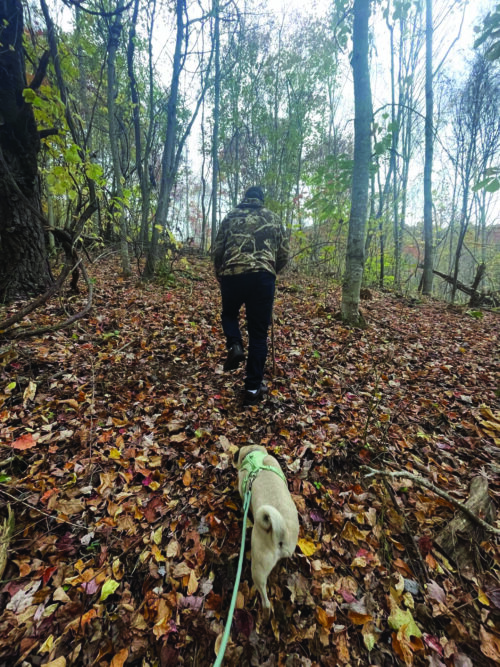
A more accessible exercise option for many folks is walking. Walking is requires no special equipment or shoes, can be done anywhere and because of its low impact, requires less recovery time. It has longer sustainability because its easier on the knees, feet and hips. Walking also helps regulate stress and, unlike running, can actually lower your cortisol levels (stress hormones).
Walking, unlike jogging or running, is something that you don’t have to schedule into an already busy modern daily grind. Rather walking is something that in many cases just “happens”. The average person in the United States walks about 1.5 to 2.5 miles a day (calculated from the average American taking anywhere from 3,000 to 5,000 steps a day. This may seem like a lot of ground to cover in the span of a day but this estimate is actually below what would be considered “sedentary lifestyle”. Though your work and lifestyle will impact how much walking you do on any given day, knowing you are already getting in about 2miles a day in steps by just going about your daily tasks should be encouraging; you are already on your way! The trick to getting the most benefit out of these already existing walking moments, is to identify them as walks of opportunity and utilize them for your health.
For starters, not everyone has or wants a pedometer. Having something track your steps all day can be stressful to some, creating the feeling that you’re a hamster in a cage running on a squeaky wheel. However, if you are always carrying your iPhone or Android, both have apps that will track your number of steps every day.
The Health app on iPhone will even track as your steps increase. If you want to go “old school”, set a timer for one minute and count your steps as you walk. Once you have how many steps you walk in a minute, use that to calculate your total step-count every time you walk.
For overall health and vitality, 10,000 steps a day should be your baseline. This would be between 4 to 5 miles of walking, depending on your stride. For example, a 6’2″ person may cover 5.5 miles, while a 5’6″ person covers 4.4 miles in 10,000 steps. How can we add these extra steps a day? You will be surprised how you can raise your daily steps with just some simple daily tricks and start closing the distance to that 10,000 step goal.
One simple hack for upping your step count is what I call the “parking handicap” (as opposed to handicap parking for folks who need the closer parking spaces). In sports, a handicap is used to equalize competition between players by giving the less-skilled side an advantage or the better-skilled side a disadvantage. In a parking lot, the parking handicap means I will park farther away from the entrance than others to get in more steps from and back to my car. This is obviously easier in large parking lots than it would be in street parking situations but the opportunity almost always presents itself to walk an additional 100 steps in 50yd. Of course, this parking tactic is only available when feasible and safe but it’s one that is most often missed as an opportunity.
If your job schedule allows for a lunch time, you can estimate how much time it normally takes you to eat, they use the rest or some of your allotted “lunch time” to walk. Though eating a meal should be taking 15 to 20 minutes to eat in a healthy manner, the average American eats a meal in between 8 to 10minutes. Rather than scroll on your phone for the remainder of your lunch break, get out and walk for 10-20minutes. That’s another 1,000 to 2,000 steps and you may also get the benefits of being outside!
The benefits of even casual daily walking are many, but most people don’t realize it because they imagine “exercise” as something that is separate from their daily life. A quick review of your daily schedule will show you how much you are already “exercising” just going about your day and with just minimal effort, you can increase your walking steps into the “sweet spot” of 10,000 steps for best health benefits.