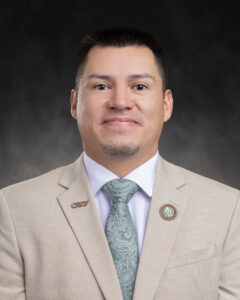
Aniwodihi (Painttown) Rep. Michael Stamper (Photo contributed)
Hello everyone,
This is my Council Report for the month of August. As school has started back, I want to wish all students a safe and productive school year. Whether you are attending elementary, middle, high school or seeking higher education, your tribe is proud of you and wish you the best.
As always, my report follows the standard format below.
Community Events
Sept. 10 – From Darkness into Hope
Annual Mental Health Awareness and Suicide Prevention Event
- Time: 3:00 p.m. – 7:00 p.m.
- Location: Oconoluftee Island
Sept. 12 – 10th Annual Cherokee Skate Jam
Registration begins at 8am
Beginner, Intermediate, Advanced divisions along with Best trick events.
- Time: 8 a.m. – Events commence and awards are given out
- Location: Cherokee Action Sports Park, Acquoni Road, Cherokee NC 28719
Project Updates
For the purposes of this article, no updates are posted for the Nvdiyeli Trail, Ceremonial Grounds, Multipurpose Facility (Old High School Site), or the new restroom facilities for the Indian Village.
Groundbreaking for IDD Enrichment Center
On Aug. 26, in coordination with Cherokee Indian Hospital Association (CIHA) and Public Health and Human Services (PHHS), there was a groundbreaking for the new IDD Enrichment Center at the old Tsali Care Center location. This project is a great example of what can be accomplished when we have a team effort from tribal resources and entities. A big thank you to all parties that have played a part in this effort up to this point, and to those who will be helping see the enrichment center grows and supplies the IDD community with some much needed resources here at home on the Qualla Boundary.
In addition to the Groundbreaking, CIHA is also seeking input on thoughts regarding the naming of the facility. If anyone has any feedback or suggestions, please reach out to Candy Ross, Assistant IDD Director. She can be reached at (828) 497-9163 x7595.
Ordinances Under Consideration
Ordinances that have been passed, withdrawn, or defeated will not appear on this list.
- Amendments to Election Laws
- Establishing an Elk Hunting Season
- Updating Laws on the Assignment of Possessory Holdings
- Ordinance Amending Chapter 41 of the Cherokee Code to Define Different Types of Ownership of a Possessory Holding
- Ordinance Amending Chapter 19-7 of the Cherokee Code Regarding Public Nuisances
- Ordinance Amending the Statute of Frauds in Chapter 22 of the Cherokee Code
- Ordinance to establish Cannabis Control Board is funded by Qualla LLC.
- Ordinance amending TABCC budgets account reports and audits
- Ordinance amending spousal inheritance in the absence of a Will
- Ordinance establishing a committee for aging and disabled in Cherokee Code
- Ordinance establishing Tribal Realty in Cherokee Code
- Ordinance requiring additional transparency in EBCI Tribal Election Campaign Financing
Work Sessions
Upcoming Work Sessions
Sept. 1
- 1 p.m. – Tabled Ordinance 250: TABCC Budget
- 2 p.m. – Tabled ordinance 226: Amending the statute of frauds
Monthly Update for Readers
This month’s update focuses on a topic that has recently been highlighted through the development of the new IDD Enrichment Center at the former dialysis center in Birdtown. The project serves as a great example of a common question faced by Tribal leaders, planners, and project managers: when is it better to renovate an existing building, and when is it more practical to tear down a structure and build new?
There are advantages and challenges associated with both approaches, and each project must be evaluated on its own merits. While there is no one-size-fits-all answer, several key factors help guide the decision-making process.
In the case of the former dialysis center, the decision to renovate was relatively straightforward. The building was structurally sound, the location was ideal, and the existing square footage could accommodate the planned activities of the IDD Enrichment Center with only minor modifications. Because the foundation and primary structure were already in place, the renovation could be completed at a significantly lower cost than constructing an entirely new facility.
Renovation also offered another major benefit: time savings. A complete demolition and new construction project would have required additional permitting, site preparation, environmental reviews, and abatement measures to ensure no hazardous materials were released during demolition. By repurposing the existing structure, the project will be able to move forward more efficiently, allowing services to be provided to the community sooner. In many cases, preserving a functional building can be one of the most cost-effective and environmentally responsible choices available.
When evaluating whether to renovate or build new, several important considerations come into play. Construction costs, material prices, and labor availability all influence the financial feasibility of a project. Equally important is the intended use of the building. Decision makers must ask whether the current layout can adequately support future operations and whether necessary upgrades can be made without creating excessive costs.
Another example can be seen in the development of Tribal Bingo by the Tribal Casino Gaming Enterprise (TCGE). Before moving forward, TCGE conducted a feasibility study to determine whether the project would be financially sustainable and to identify the amount of floor space needed to support the proposed operation. Once those requirements were established, planners evaluated an existing structure located on the parcel of land designated for the project.
Although the building initially appeared to be a potential candidate for renovation, a closer examination revealed significant challenges. Because the structure had been built decades earlier, extensive upgrades would have been required to meet modern building codes, safety standards, accessibility requirements, and occupancy demands. The cost of making those improvements exceeded the cost of constructing a new facility that could be specifically designed for the projected needs of the business. As a result, the decision was made to demolish the existing structure and build a new facility from the ground up.
This example demonstrates that while renovations can often provide substantial savings, they are not always the most economical solution. Older buildings may conceal structural, electrical, plumbing, or mechanical issues that significantly increase project costs. In situations where extensive modifications are required, new construction can provide greater long-term value, lower maintenance costs, improved energy efficiency, and a design that better serves the intended purpose of the facility.
Beyond construction costs, all capital projects must also be considered in the context of the Tribe’s overall budget and strategic priorities. Each year, Tribal leadership is tasked with reviewing a lengthy list of proposed projects and determining which initiatives can move forward during the fiscal year. These decisions require careful consideration, especially during periods of economic uncertainty when available resources may be more limited.
Historically, periods of strong economic growth made these decisions somewhat easier. Today, however, greater emphasis is placed on prioritizing projects that provide the greatest return on investment and long-term benefit to the Tribal community. As a result, projects often receive higher priority when they meet one or more of the following criteria:
- Grant-funded or cost-shared projects that leverage outside funding sources and reduce the reliance on Tribal dollars.
- Revenue-generating projects that can eventually reimburse their initial costs and create sustainable income for future Tribal initiatives.
- Community-benefit projects that enhance recreational opportunities, support families, improve quality of life, or provide essential services to Tribal members.
Projects that satisfy multiple criteria often rise to the top of the capital project list because they deliver both immediate and long-term benefits. They create opportunities to maximize available funding while addressing critical community needs.
Whether the decision is to renovate an existing structure or construct a new one, the ultimate goal remains the same: making responsible investments that serve Tribal members, strengthen the community, and ensure that resources are used wisely. The recent IDD Enrichment Center and Tribal Bingo projects illustrate how careful planning, financial analysis, and long-term vision help guide these important decisions. By evaluating each project individually and considering both current needs and future opportunities, Tribal leadership can continue investing in projects that create meaningful and lasting value for generations to come.
Michael Stamper
Tribal Council Representative
Painttown Community
828-736-6192