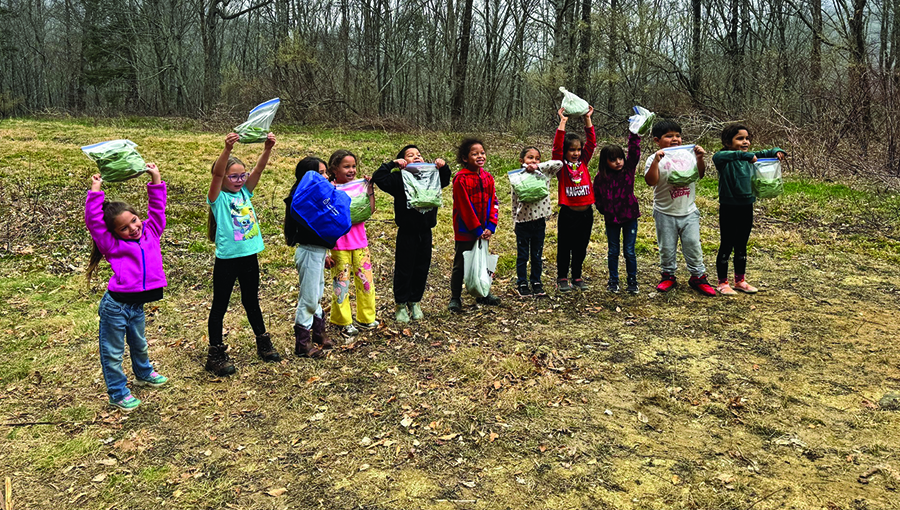
New Kituwah Academy students are shown, left to right, at the ramp patch at Standing Indian Campground in Franklin, N.C. on Thursday, March 26 including Yona Ramirez, Saloli Beck, Kuwaya Walkingstick, Ugeyudi McKinney, Adela Watty, Nano Nulinigvgv Arch, Svnoyi Watson, Tsiya Huskey, Kawaya Waldroup, Tsodani Reed, and Kawi Owl. (Photos courtesy of Kelly Murphy, New Kituwah Academy, and Taylor Wilnoty, KPEP)
By TAYLOR WILNOTY
New Kituwah Academy parent and Cherokee second language learner
There’s something truly special about learning alongside your child, especially when that learning is rooted in culture, language, and community. Recently, I joined the Atse Kituwah Analenisgi (kindergarten) class on a trip to the ramp patch at Standing Indian Campground in Franklin, N.C. on Thursday, March 26. As both a parent and a second-language learner, this experience was more than a day out in the woods; it was a reminder of what it truly means to pass knowledge from one generation to the next.
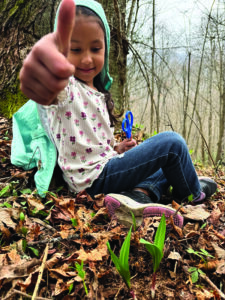
Svnoyi Watson
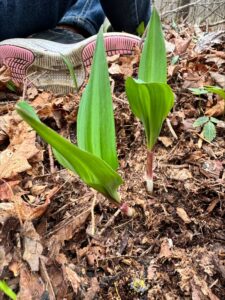
From the start, the day reflected our core values. The students weren’t simply gathering ramps; they were engaging in a process grounded in respect, responsibility, and relationship. They carefully searched for ramps, learned how to cut them properly, and understood the importance of leaving the roots in the ground so they could grow again. This act of stewardship showed their growing connection to the land—our homeland—and their role in protecting it for future generations. It also reflected a deeper value: taking only what is needed so the land continues to provide for those who come after us.
Equally meaningful was the role of language throughout the experience. The teachers, Utsisdalugi nole Tsisgwa, and their students intentionally provided the Cherokee language as we searched for and cut the ramps. I appreciated how naturally the language was woven into the activity. Rather than switching back to English, we were encouraged to stay in the language, using words and phrases connected to what we were doing in real time. This kind of immersive, hands-on learning made the language feel alive and relevant—not something separate, but something we carry with us in everything we do.
 As a parent, I left feeling proud. As a second-language learner, I left feeling inspired. And as part of this community, I was reminded that preservation doesn’t happen alone—it happens through ᎦᏚᎩ ‘gadugi’, through language, through shared experience, and through our commitment to teach the next generation not only how to live, but how to live as ᏣᎳᎩ ᎠᏂᏯᏫᏴ.
Word List:
ᏩᏍᏗ (wasdi) – Ramp
ᏩᏍᏗ ᏧᏰᎦ (wasdi tsuyega) – Ramp Patch
ᎤᏆᎶᎦ (ugwaloga) – Leaf
ᏧᏆᎶᎦ (tsugwaloga) – Leaves
ᎠᏥᎸᏍᎦ (atsilvsga) – Flower
ᏧᎦᏔ (tsugta) – Seeds
ᎤᏩᏂᎦᏢ (uwanigatlv) – Stem
ᎤᏝᏅ (utlanv) – Bulb
ᏧᎾᏍᏕᏥ (tsunasdetsi) – Roots
ᎭᎦᎭᎷᏯ (hagahaluya) – You Cut It
ᎭᏍᎪᎳ (hasgola) – You Dig it