 Hello everyone,
This is my Council Report for the month of February. I want to begin by publicly expressing my appreciation for the collective effort shown by our Tribal programs in both the preparation for and response to the recent snowstorm on the Boundary. As always, my report follows the standard format below.
Community Events
Feb. 24– Groundbreaking Ceremony for Bingo
A groundbreaking ceremony will be held for the new Class II gaming facility beginning at 2:30 p.m.
Project Updates
Recently Completed Projects
This list will be updated as projects are completed for the calendar year 2026.
Projects Currently Underway or Nearing Completion
There have been no substantial changes to the projects listed below.
Nvdiyeli Trail
The project is nearing completion. A ribbon-cutting date will be shared as soon as it becomes available.
Ceremonial Grounds
Groundwork has been contracted and is currently underway.
Multipurpose Facility (Old High School Site)
This project remains in the design and development phase. A completion date has not yet been determined. (No change from January report.)
New Restroom Facilities for the Historical Area (Indian Village and Fire Mountain Trails)
Designs have been approved, and the RFP process is about to begin. The goal is to complete this project before the new season opens. (No change from January report.)
Ordinances
(Any ordinance that has been passed, killed, or withdrawn will not appear on this list.)
- Amendments to the Judicial Code, Chapter 7 of the Cherokee Code
- Compliance with NC State requirements for Underground Storage Tanks
- Amendments to election laws
- Amendments to ethics laws for filing complaints
- Amendments to fishing – Naming “Tom Dooley Law”
- Amendments to update the Tribe’s fishing laws
- Eminent Domain
- Civil Procedure
- Establishing a Minor’s Fund from revenues from Qualla LLC
Work Sessions
Feb. 23
- 9 a.m. – Tabled Res. 27 (2025): Transparency in Tribal governance
- 10 a.m. – Tabled Res. 28 (2025): Weighted votes
- 11 a.m. – Tabled Res. 30 (2025): Enhance transparency in Tribal government
Feb. 24
- 1 p.m. – Tabled Ord. 6 (2025): Judicial Code
March 2
- 9 a.m. – Work session with Beloved Woman/Man Committee
- 10 a.m. – Tabled Ord. 107 (2026): Ethics Ordinance
- 2 p.m. – Work session for Underground Storage Tanks – EPA and NCDEQ
Recently Held Work Sessions
Feb. 4
- 1 p.m. – Request from Lands Committee: Fair market value for land
- 2 p.m. – Tabled Ord. 14 (2025): Update Tribe’s fishing laws
- 3 p.m. – Natural Resources: Hunting laws (Elk)
Monthly Update for Readers
This month’s topic focuses on Tribal Government and Strategic Planning. As elected officials, our responsibility is to keep the public informed and engaged regarding where we are as a Tribe and where we are headed. As a sovereign government operating with the interests of our members at the forefront, we must continually evaluate our strategies and adjust as needed.
A common challenge is creating and maintaining long-term strategic plans as administrations change. Developing five- or ten-year plans can be ambitious when no elected official is guaranteed another term. This reality often leads administrations to focus on goals that can realistically be accomplished within a four-year term.
I believe we, as EBCI, are in a precarious position. Historically, our lobbying goals and objectives have centered on Indian Country and preserving tribal sovereignty in all its forms. For decades, EBCI has built strong relationships at both the state and federal levels and has done so successfully. This is not to suggest we abandon those efforts or reduce our engagement. On the contrary, we should continue strengthening those relationships—but perhaps with a different mindset.
As some may be aware, EBCI will be withdrawing from tribal organizations of which we are founding members, including the United South and Eastern Tribes (USET) and the National Congress of American Indians (NCAI). These discussions have taken place over several years, largely due to concerns about the increasing number of state-recognized groups and the impact that growth has had on the unified voice of federally recognized tribes within those organizations. This decision was not made lightly. The relationships we have built across Indian Country and with other federally recognized tribes remain invaluable to EBCI.
When I refer to a precarious position, I also mean that we are living in a time when technology allows information to be shared instantly and widely. Community members can voice their opinions within minutes, and that engagement demonstrates that people are paying attention and that they care. That level of awareness can and should be used to our advantage.
If there are initiatives you believe your elected officials should pursue, voice your opinion. In today’s political environment, communication matters. Reach out to your Council member, Chief, Vice Chief, county commissioner, state representatives, members of Congress, Senators, and Governor. I welcome and appreciate input from our communities regarding items on Tribal Council’s agenda.
This is an effort to emphasize that we are in a position to realign our strategic goals with a rapidly changing environment. The world we are living in during 2026 is different from 2025. As enrolled members of a federally recognized tribe, we have never had to bargain, beg, or plead for our legitimacy before federal legislators, and we will continue to make an impact in Indian Country.
Community members have the ability to help shape what our future strategic plan looks like. Do we place a heavier focus on the Town of Cherokee? Do we prioritize placing all newly purchased lands into trust status to reclaim ancestral homelands that once spanned five states? Do we focus more on services for enrolled members? Or do we concentrate more heavily on revenue-generating projects?
These are significant decisions that elected officials will be responsible for making, and those decisions will affect generations to come. We cannot afford to be silent. We cannot afford to lose momentum. We must continue working toward generational wealth and long-term sustainability. “We are still here… and we always will be.”
In closing, I have received requests to provide more information about Tribal programs and the services they offer. Rather than highlighting specific programs, I believe it is best to provide an overview of all divisions within the Tribal workforce and the services they provide. This cannot be accomplished in a single report, so I will begin breaking down each division in the coming months to give greater insight into available resources and important service deadlines.
There are eleven (11) divisions that make up the Tribal workforce: Finance, Human Resources, Operations, Information Technology, Office of the Attorney General, Commerce, Community Education & Recreation Services, Law Enforcement, Snowbird & Cherokee County, Public Health and Human Services, and Housing. In future reports, I will highlight programs within each division and outline the services they provide.
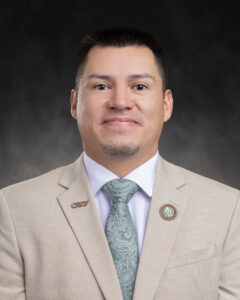
Michael Stamper
Tribal Council Representative
Painttown Community
828-736-6192
mikestamper@ebci-nsn.gov