By BROOKLYN BROWN BIGMEAT
One Feather Reporter
CHEROKEE, N.C.— EBCI (Eastern Band of Cherokee Indians) Public Health and Human Services (PHHS) has instituted a flowerbed project as part of the Tribal Health Improvement Plan (THIP). There are nine tribal programs and groups participating in the project. Throughout the month of November, the One Feather will feature each of those groups and their flowerbeds. This article features the flowerbed at the Wayohi (Wolftown) Fire Substation created by the VOC Client Activities Program, and the flowerbed at the Peaches Squirrell Sports & Recreation Complex in Tsisqwohi (Birdtown) created by EBCI Water Quality and Cherokee Fisheries & Wildlife Management.
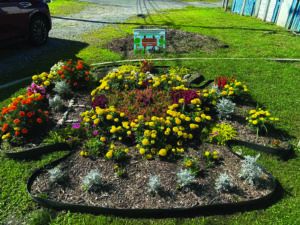
This photo shows the flowerbed at the VOC (Vocational Opportunities of Cherokee). (Photo courtesy of Sky Sampson)
VOC Client Activities Program
Magda Sanders, client services manager, said her program chose to participate in the project to provide a nearby beautification space, and to give their clients an opportunity to learn a new skill. “We always look for different volunteering opportunities…[The clients] love looking at it, watching the flowers bloom, and they love the attention from the Fire Department workers. The firefighters love it, too, and they’ve always made sure they came out and talked with everybody. So, it was lots of interactions between our agencies, and I think that was the best part.”
Amanda Washington, client services coordinator, said they modeled the shape of the flowerbed after the Cherokee Fire & Rescue symbol.
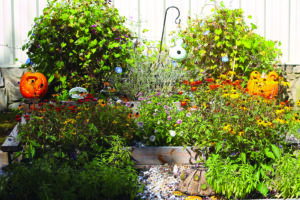
This photo shows the flowerbed, maintained by the EBCI Water Quality and Cherokee Fisheries & Wildlife Management programs, at the Peaches Squirrell Sports & Recreation Complex. (BROOKLYN BROWN BIGMEAT/One Feather photo)
EBCI Water Quality and Cherokee Fisheries & Wildlife Management
Rainee Tetreault, water quality program supervisor, and Jessica Nagel, lead wildlife biologist, said their programs collaborated on the flowerbed at the Peaches Squirrell Sports & Recreation Complex. “We both work under Natural Resources, but we thought this would be a good idea just to kind of promote pollinators. That’s a big thing that we try to work on in Fish and Wildlife. And we wanted to add some pieces incorporating Yvwi Ganvhida (Long Person) with some plants so we could promote shading your stream and some of the wildlife pieces that come with the river, like the daksi (turtle)” Nagel said.
Tetreault added, “It’s also been that additional way to interact with the community. My office is at the wastewater plant, so we don’t get a lot of visitors down there. It was also a great opportunity to get to collaborate more with Fish and Wildlife…It’s pretty and it’s a fun thing to work on. And a lot of times when I’m out here deadheading or doing things, people come up and they seem to like it.”