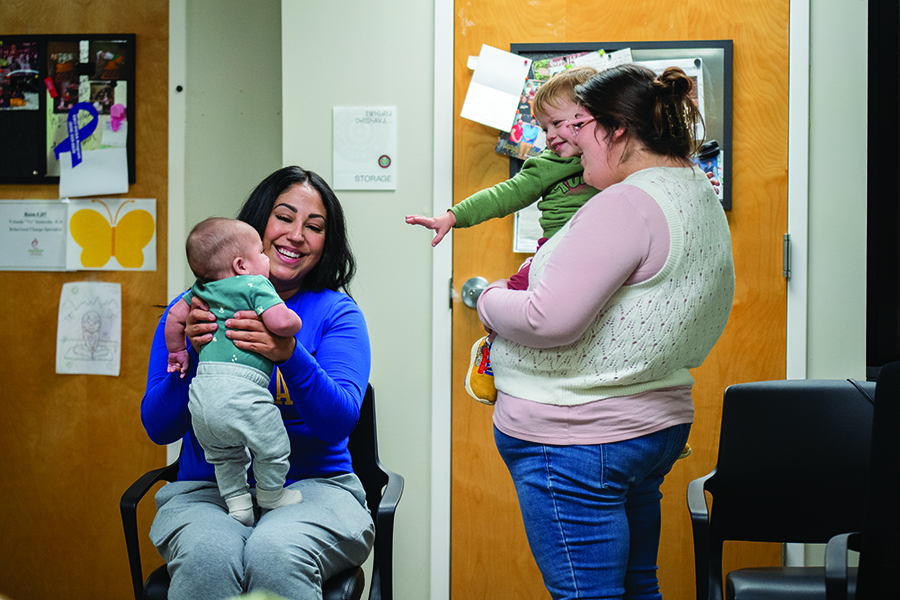
Brandi Lambert, seated, and Madison Leatherwood are shown with their children at a recent Mother’s Gathering hosted by the Cherokee Doula Program. (Photos courtesy of Center for Native Health)
By SCOTT MCKIE B.P.
One Feather Asst. Editor
CHEROKEE, N.C. – The Cherokee Doula Program has been operating for over a year and is working diligently at bringing back a traditional practice aiding mothers and babies.
In January 2025, The Center for Native Health (CNH) was selected to receive a $500,000 grant, provided by the Rockefeller Philanthropy Advisors and supported by the Spirit Aligned Leadership Program, to establish a doula program for the Eastern Band of Cherokee Indians (EBCI).
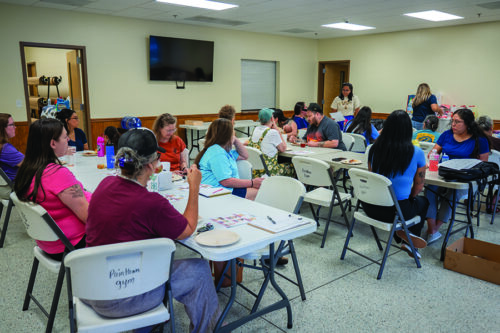
Kelly Murphy, standing in front, an EBCI tribal member who is the new Center for Native Health cultural education specialist, speaks at a recent Mother’s Gathering hosted by the Cherokee Doula Program.
The Cherokee Doula Program is known as Dinineladi dinisdelvhido “those who care for the pregnant ones”. The doulas completed training from Zaagi’idiwin (mutual love) Full Spectrum Indigenous Doulas organization.
According to WebMD, “A doula provides emotional and physical support to you before, during, and after your pregnancy and childbirth. Doulas aren’t medical professionals. They don’t deliver babies or provide medical advice or medical care. Doulas assist and advocate for the birthing parent.”
“I think it’s going great,” said Onita Bush, an EBCI tribal elder and Cherokee first language speaker from Tutiyi (Snowbird) who works with the program. “I’m just glad it’s coming back to our tribe. It’s been gone for so long. It’s finally coming back and it’s finally getting done. We’re on our way to having this historical event coming back to all of us. It has been forgotten and it’s coming back. I’m happy to see it coming back.”
Lori Sanders, an EBCI tribal member, serves as one of the program’s three current doulas along with Brittany Hampton and Brandi Lambert. She noted, “I’m always gushing about this. It’s just the best thing ever. There are different seasons for everything that I’ve done and this just is perfect for me now. It’s fantastic. I have it in my tank to give. I can drop everything in a second. It’s been fantastic. I’ve had some really young moms – grateful. I’ve been so grateful because they’re just winging it – no clue. So, it’s just wonderful to be there for extra support.
It’s just nice to have another voice to be able to talk to about your concerns, questions, get another outside person’s point of view who’s seen it a few times already, who has experience in lots of different situations that can happen. It, I have found, helps to kind of calm mom down.”
Currently, a total of 23 mothers have received doula support through the program and doulas have supported 15 births.
Sanders said the benefits of a mother having a doula are undeniable. “I’m always interested in listening to what they want, what they need, what they’re afraid of. I’m really into it and telling them my experience in my past labor and deliveries that I’ve been into. And, it takes a little bit of the anxiety off of everyone else in the room that’s participating. The hospital staff is very appreciative of us because I end up being a little bit of a go-between. Then, the mom is very much more relaxed.”
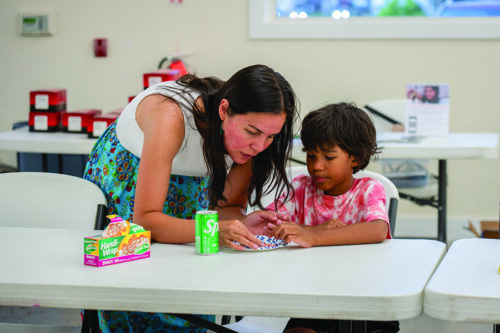
Kristina Hyatt, an EBCI tribal member who is the Center for Native Health relational health program director, is shown working with her son, Nygel, at a recent Mother’s Gathering hosted by the Cherokee Doula Program.
Kristina Hyatt, an EBCI tribal member who is the CNH relational health program director, commented on the benefits of having a doula. “The mental health aspect of it, just being a person there to offer encouragement. One of the things we have tried to incorporate is positive affirmations in the Cherokee language that our doulas can also share with the moms. Then, the physical aspect of it, too. When they’re in the room with the mom about to give birth, they’ve learned different tips and tricks to help make them more comfortable.”
She said they are planning another doula training before the end of the year. “We are seeing a need for more. We have a partnership with the NFP (Nurse Family Partnership) Program…they are still referring moms over to us. And, those are moms that they feel need some additional support beyond what their nurse home visitors provide.”
Kelly Murphy, an EBCI tribal member, is the new CNH cultural education specialist.
“I’m bringing the language and culture into it. The doula training that we do is Indigenous. It’s an Indigenous doula training, so that’s what we’re trying to bring into it – the positive affirmations in Cherokee, just more of that. Not only language but culture, too.”
She said the doula program is operating Indigenously. “It’s who we are. We’ve been doing this for thousands of years outside of modern practices. It’s worked, so I’d like to find what it used to be and bring it back to do that.”
Murphy said they have started a Mother’s Garden at Kituwah – the Mother Town of the Cherokee. “This is the first year we’ve done it…it’s shaped like a mother. She’s got a baby on her back. So, around that we’ve planted things that are good for mom and baby. Bull nettle has just kind of taken over it right now. It’s everywhere. But, I really appreciate that because if anybody reaches out for that need, we can just go and grab it. We’ve got cabbage in there. That’s always good for breastfeeding…my plan for next year is for it to be bigger and for there to be events there to get moms and families involved.”
Hyatt said the program has also been hosting monthly Mother’s Gatherings. “There’s been a lot of moms – even dads will come out to that. So, really, it’s called a mother’s gathering, but anyone is welcome to come – anyone a part of that support group. We all are just very grateful to be a part of the Center for Native Health because what we do is fill the gaps.”
Information from the Center for Native Health states, “The Cherokee Doula Program emphasizes:
- Traditional Cherokee practices in pregnancy, birth, and postpartum care
- Support for families across the journeys to motherhood, including birth, postpartum, and grief
- Language and cultural integration, including Cherokee songs, stories, and food traditions
- Community connection, through Mothers Gatherings, and pairing doulas with families to walk beside them in supportive ways
For more information, contact the Center for Native Health at (828) 708-8748 or visit: https://www.centerfornativehealth.org