Submitted by The Center for Native Health
CHEROKEE, N.C. – The Center for Native Health (CNH), in partnership with New Kituwah Academy (NKA), Cherokee Central Schools (CCS), the Eastern Band of Cherokee Indians (EBCI) Natural Resources Department, and Smokies Life, is proud to support the creation and ongoing operation of the Youth Conservation Clubs (YCC).
By blending outdoor exploration, storytelling, conservation projects, and cultural teachings, the YCC helps students understand their role as future caretakers. The program integrates Cherokee Ecological Knowledge with contemporary conservation practices such as water quality monitoring, offering a holistic, place-based approach to environmental education rooted in community and culture.
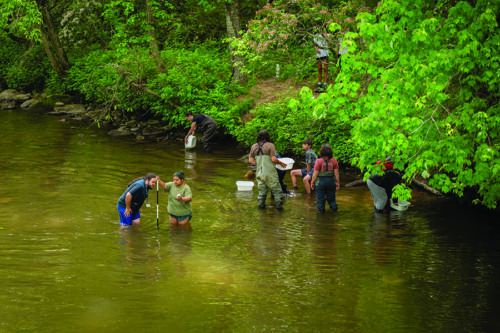
Students from Cherokee Central Schools (CCS) Youth Conservation Club (YCC) are shown learning about macroinvertebrates and water quality monitoring with the help of EBCI NRD. (Photo courtesy of The Center for Native Health)
Executive Director of CNH, Trey Adcock Ph.D., hopes “that this program will help these students develop cultural awareness with blended skills that will propel them further in their education and in their respective career choices. I hope they pursue these ideas in their education and then come home to work within the ancestral landscape”
Storytelling serves as the program’s foundation. Students engage with traditional Cherokee stories, exploring how these teachings relate to modern challenges such as climate change, biodiversity loss, water protection, and community health. This connection between ancestral wisdom and current environmental issues gives youth a deeper, more personal understanding of sustainability.
As part of CNH’s Weaving Intergenerational Pathways program, the YCC currently serves approximately 50 students from elementary through high school. It includes two after-school clubs: Judaculla’s Kids and the Cherokee Central Youth Conservation Club. Guided by the Cherokee principles of Duyvktv (right relationships) and Tohi (balance and wellbeing), the clubs emphasize that healthy communities depend on healthy relationships with the land, water, plants, animals, and one another.
Throughout the year, students participate in hands-on activities ranging from habitat restoration and pollinator protection to native plant identification and climate resilience strategies. They learn directly from Elders, cultural practitioners, language instructors, and conservation professionals, gaining both practical skills and a sense of responsibility for Cherokee homelands. Beyond environmental education, the clubs foster leadership, teamwork, and confidence, encouraging youth to see themselves as active changemakers.
Katie Tiger, program director of CNH’s Weaving Intergenerational Pathways states, “As climate challenges impact communities, programs like the YCC ensure the next generation is equipped with both traditional knowledge and modern conservation tools. By nurturing a strong sense of cultural identity and stewardship, these clubs cultivate future leaders dedicated to Cherokee values of balance and respect.”
Judaculla’s Kids, the New Kituwah Academy’s club, serves 30 students in grades 3-6. Named for the legendary Cherokee guardian of the natural world, the club is grounded in teachings of reciprocity and sustainability. According to tradition, Judaculla’s handprint on Jackson County’s Judaculla Rock serves as a lasting reminder of collective responsibility to care for the land.
The Cherokee Central Youth Conservation Club (CCYC) currently serves 10-25 students in grades 8-12. In the coming year, students will have the opportunity to design a logo and select an official name for the club.
Through these teachings, Cherokee youth are learning that caring for the land is more than a responsibility; it is a sacred relationship connecting past, present, and future generations. Last school year the students in the clubs:
- Attended field trips to Devil’s Courthouse, CNH Garden, Judaculla Rock, NC Arboretum, and a river cane patch, planted a pollinator garden, collected ramps, participated in water quality monitoring, started bee keeping, and built Cherokee creatures out of recycled materials.
CNH officials noted, “We are incredibly grateful to the Cherokee Preservation Foundation and First Nations Development Institute for their grant funding, which supports Youth Conservation Clubs for the 2026/2027 academic year. Their commitment helps us sustain these vital services for Cherokee youth.”