
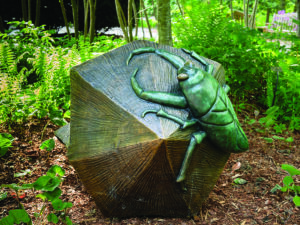
“Sacred Earth”; Artist: Karen Sixkiller (Cherokee Nation citizen); Material: cast bronze
In the Stream Garden (Photo courtesy of N.C. Arboretum)
Submitted by North Carolina Arboretum
ASHEVILLE, N.C. – Spring always brings revitalizing changes to The North Carolina Arboretum, and this season, one of these is the installation of a magnificent addition to the Arboretum’s art collection. “Sacred Earth” by Cherokee Nation sculptor Karen Sixkiller features a larger-than-life water beetle perched on a large, faceted form and can now be seen along the walkways of the Stream Garden.
“Sacred Earth” tells one of the oldest Cherokee stories — where a humble water beetle dove to the bottom of the ocean and brought up mud to create all the solid land we now live on. Sixkiller shares that the sculpture was inspired both by the Cherokee creation story and her own feelings of appreciation and reverence for the land that ultimately feeds, clothes, shelters and makes our lives possible.
“Earth is more than ‘dirt.’ It has its own life, structure, and legacy that can add magic and wonder to our lives if we slow down and pay attention to it. Sharing these understandings through placement at The North Carolina Arboretum is an honor, as the Arboretum setting holds the sculpture like a jewel within some of our ancestral lands,” Sixkiller says.

Karen Sixkiller
The sculpture was dedicated in memory of Joan Sandgren Bridges, whose family chose the Arboretum for this unique and meaningful tribute. The gardens, her family notes, were a special place for her and she visited often during her 30 years in Asheville.
The Arboretum’s Executive Director Drake Fowler added, “Artists help us all see ourselves in a different light. Here at the Arboretum, when we match an artist’s vision to a special place in nature, the emotional impact sinks deeper into your soul. Adding ‘Sacred Earth’ by Karen Sixkiller to our gardens is a true honor, and we could not have done this without the vision and generosity from the family and friends of Joan Sandgren Bridges.”