By BROOKLYN BROWN BIGMEAT
One Feather Reporter
CHEROKEE, N.C. – A community input meeting was held on the evening of Thursday, July 9 at the Pam Taylor Gymnasium in Aniwodihi (Painttown) by the Office of the Principal Chief to discuss the ongoing build of the Eastern Band of Cherokee Indians (EBCI) Missing and Murdered Indigenous Women, Girls, and People (MMIWGP) online database.
The resolution to establish the database was passed in April 2025. The Office of the Principal Chief is spearheading the database with help from Cherokee Indian Police Department (CIPD) and the EBCI Information Technology (IT) department.
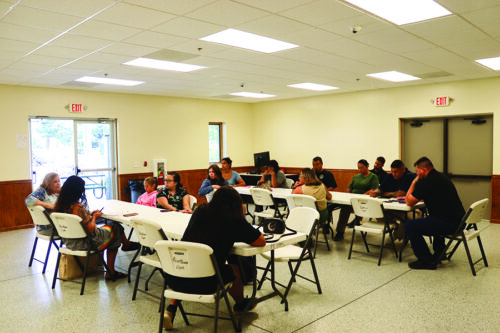
The Office of the Principal Chief held a community input meeting on the evening of Thursday, July 9 at the Pam Taylor Gymnasium to discuss the development of the EBCI MMIWGP database. (BROOKLYN BROWN BIGMEAT/One Feather photo)
The Office of the Principal Chief shared in a public flyer that the community meeting was intended “for feedback and questions regarding the development of the EBCI MMIWGP Database.” They also shared a community input survey in March, which Public Relations Officer Sheyahshe Littledave said received numerous responses.
Those in attendance at the meeting included Littledave, interns Annasette Cooper and Mahala Bird, Maggie Jackson and Diane Welch from the Qualla Boundary Missing and Murdered Indigenous Women (QBMMIW) grassroots organization, officers from CIPD, Chief of Police Carla Neadeau, Assistant Chief of Police Josh Taylor, Investigations Captain Roger Neadeau, EBCI IT Director Kevin Jackson, Lisa Wells from Reflections of Inspiration, the family member of an EBCI missing person, and a community member from Wayohi (Wolftown).
Kevin Jackson said the database is currently being built and is not live or accessible yet. “Right now, [the draft database] is just basic information of name, date, location, just really generic. The reason it’s built so generic is right now we’re trying to put our feelers out in the community and find out what the community feels, what they want to share. We know it’s very sensitive and we want to protect that confidentiality piece. I know there’s ongoing investigations. There’s a lot of things that we have to take into consideration when building a database and I think that’s the biggest question is what is shareable from the community’s perspective as far as the families go that have been affected by this issue.”
Jackson said IT is building the database, but CIPD is heading the data entry.
Maggie Jackson added, “If you’re asking what we’ve heard from the community, what they want shared, I think it would depend on what the intent of the project is. Is it just like to create a database of all the known cases, or is there intention to reopen cases, what is the end goal?”
Littledave responded, “The end goal is really just creating awareness…I think the idea was to create just an official database for the tribe that we partner with the PD and partner with legal just so we can have some more eyes on what we’re looking at and more evidence-based data that we can go off of, because the idea is we’re going to bring somebody in from [Public Health and Human Services (PHHS)]and we’re going to work on pattern analysis and kind of have that show us what we need to work on in terms of awareness or resources or things we need to look at for the community. Teenage dating violence, things like that.”
Welch said she thinks the end goal is multifaceted, “I think it’s justice. I think it’s healing. I think it’s education. I think it’s awareness. I think it’s moving forward and learning better.”
Maggie Jackson added, “If it’s just a database or just a list, then people aren’t going to be as willing to tolerate the trauma of having to relive something with their loved one. But if there is intent behind it and there’s a formal project of what the outcome is to be, then that is going to be more tolerable for people because there’s something worth the pain of having to relive it.”
Kevin Jackson suggested that the public facing aspect of the database include the basic information of each case, and the confidential or intimate details, such as parts of an ongoing investigation, remain behind the public facing aspect of the database but still tracked, so that data tracking can occur without harming the family or the investigation.
Jackson said his team would work on producing a first draft that the community could look at and tear apart at the next meeting to be determined.
The One Feather will continue to provide updates on the database and community meetings held moving forward.